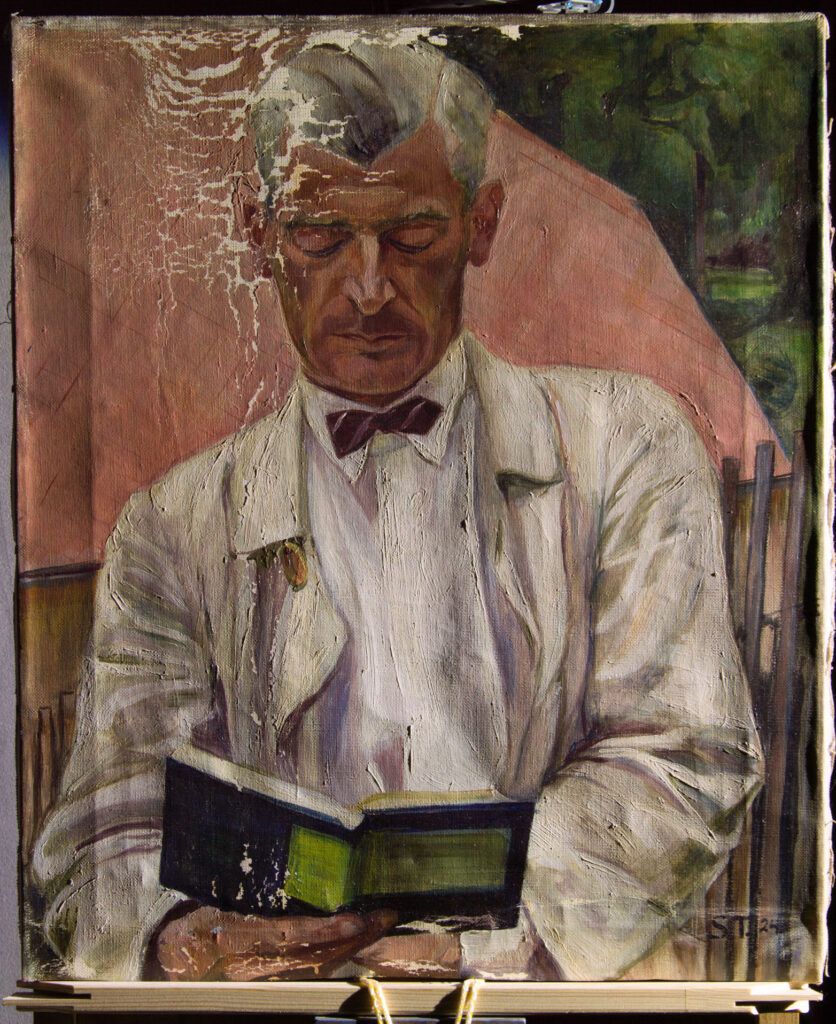
Grandfather

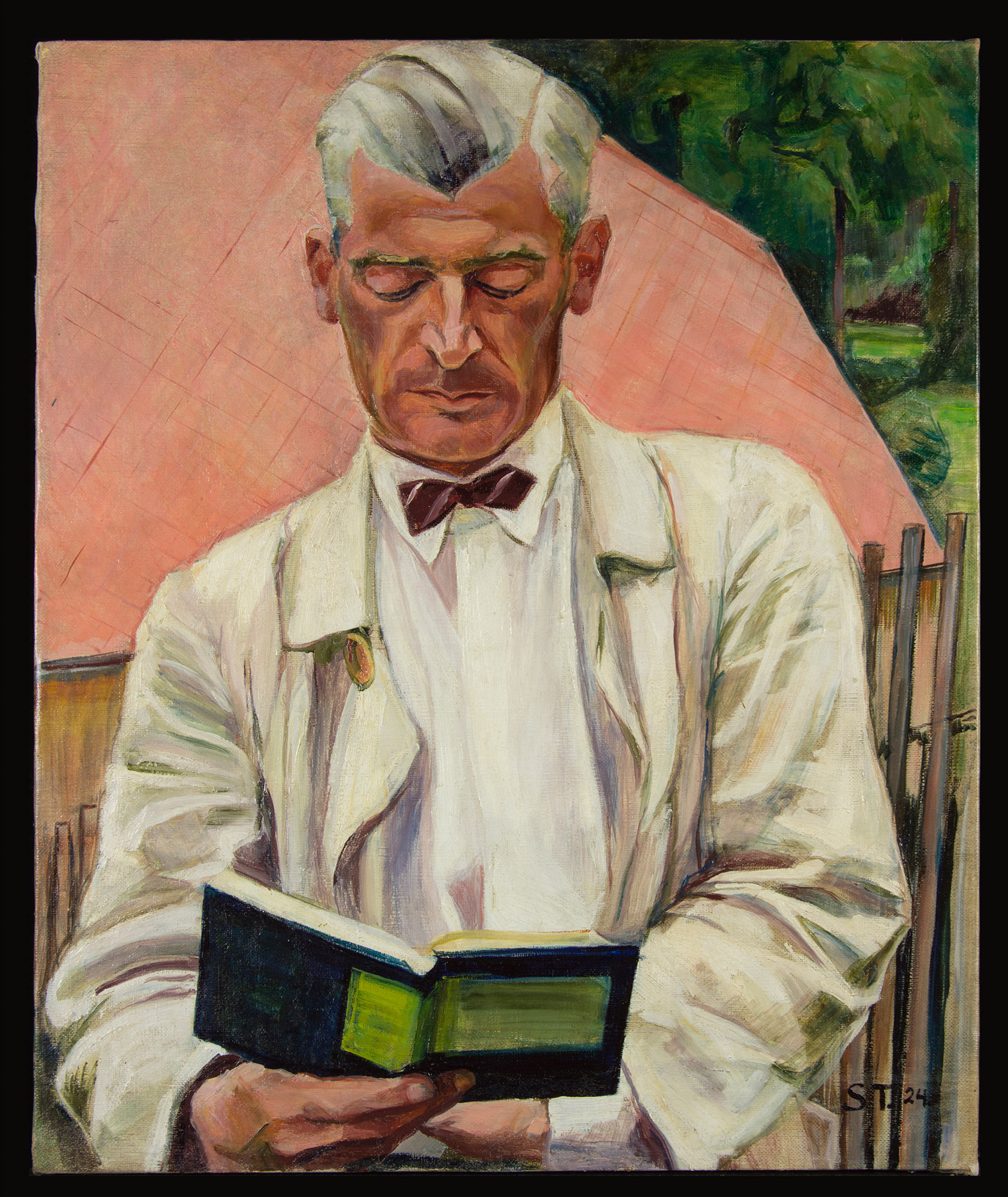
Technique: Sláva Tonderová-Zátková
Dimensions: 60 cm x 50 cm
Date: 1924
Condition of the Artwork Before Restoration
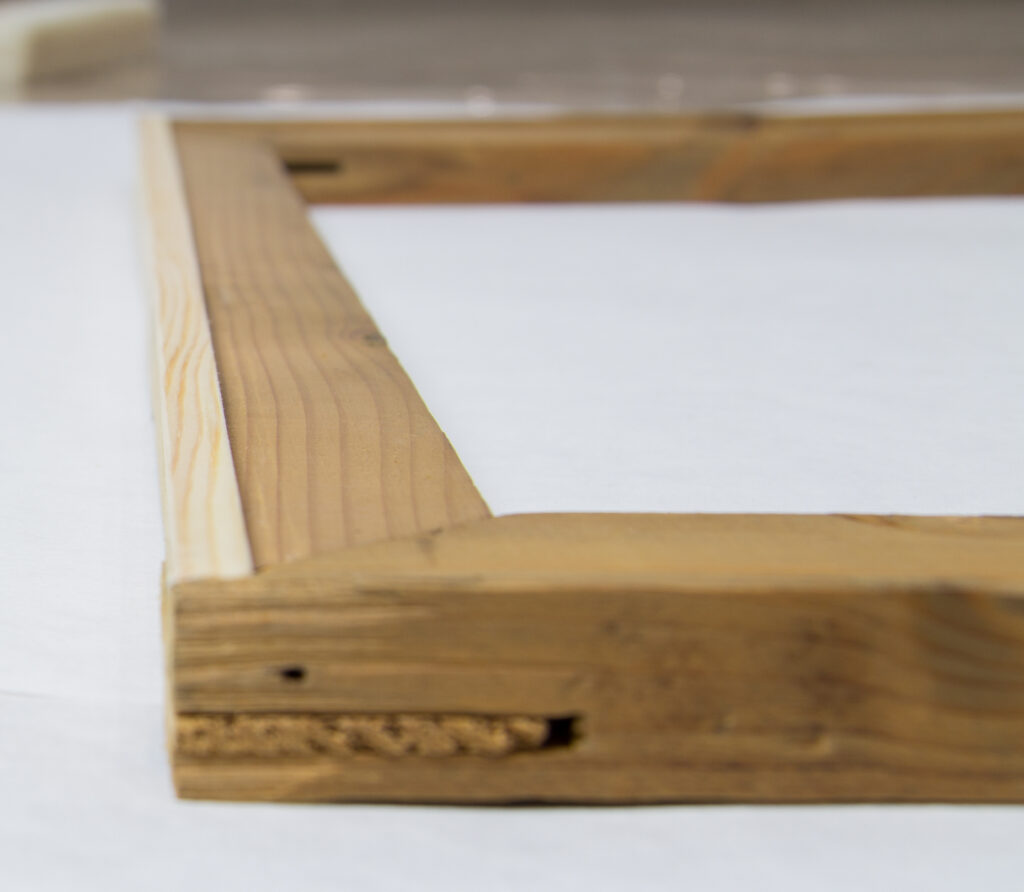
The canvas is stretched on a rectangular stretcher frame with a profiled edge, tightened with eight wedges. Despite this, the canvas sags, and stretcher bar marks are visible. These marks disrupt the painting’s appearance and layer cohesion. The edges and corners show significant warping, which is obvious under strong side lighting.
We can see that the canvas was previously restretched, possibly on the original stretcher, but it was done incorrectly. The paint on the left and right sides doesn’t extend over the stretcher’s edges, while it does at the bottom. At the top edge, there’s a half-centimeter unpainted strip, matching the paint overlap at the bottom. This might indicate an artist’s adjustment for framing.
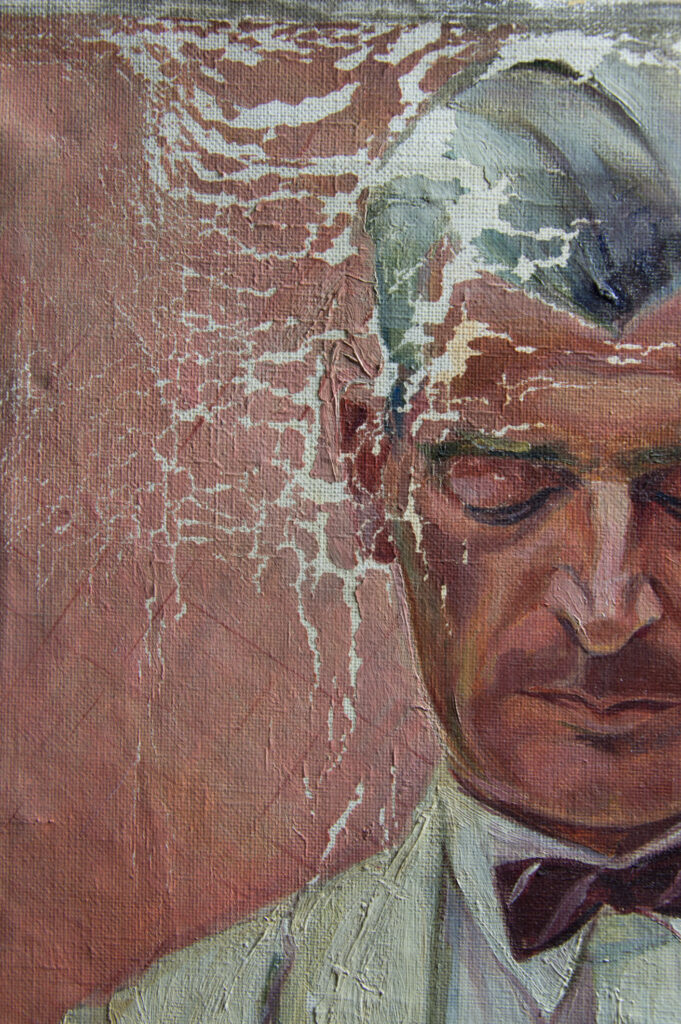
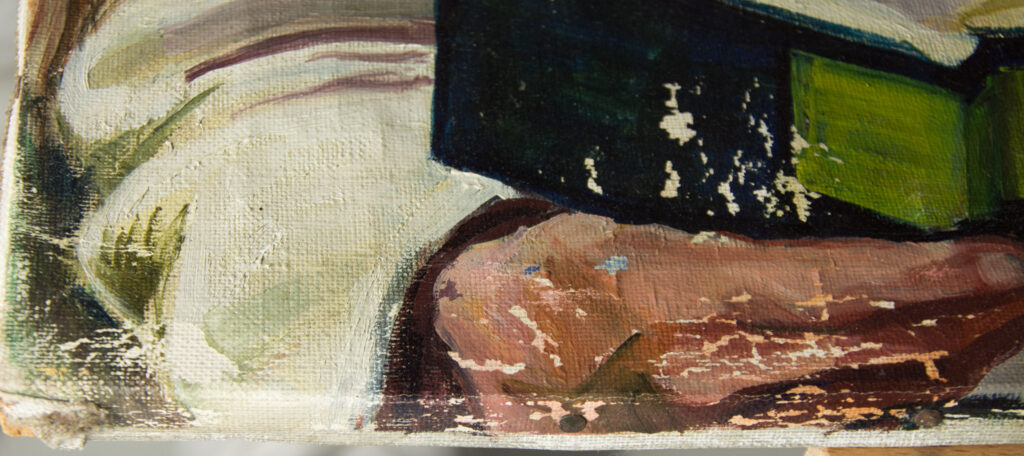
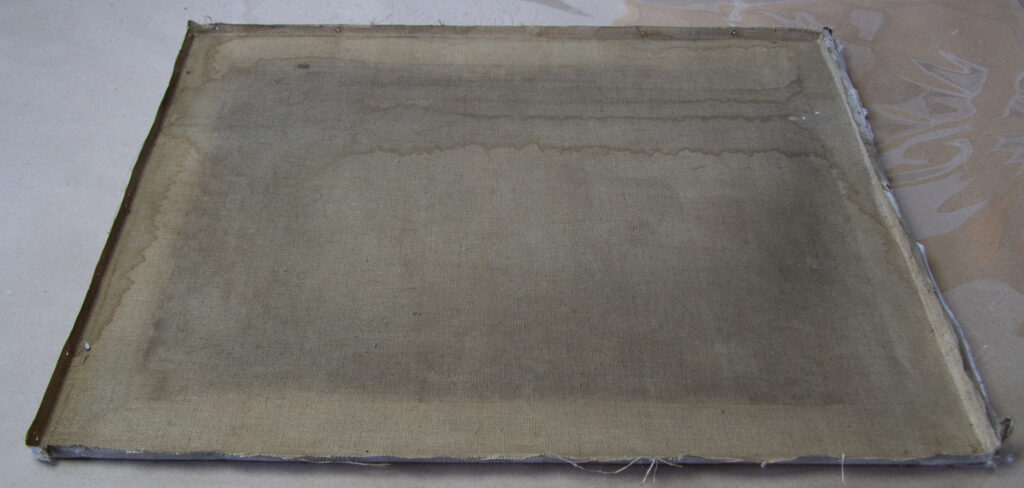
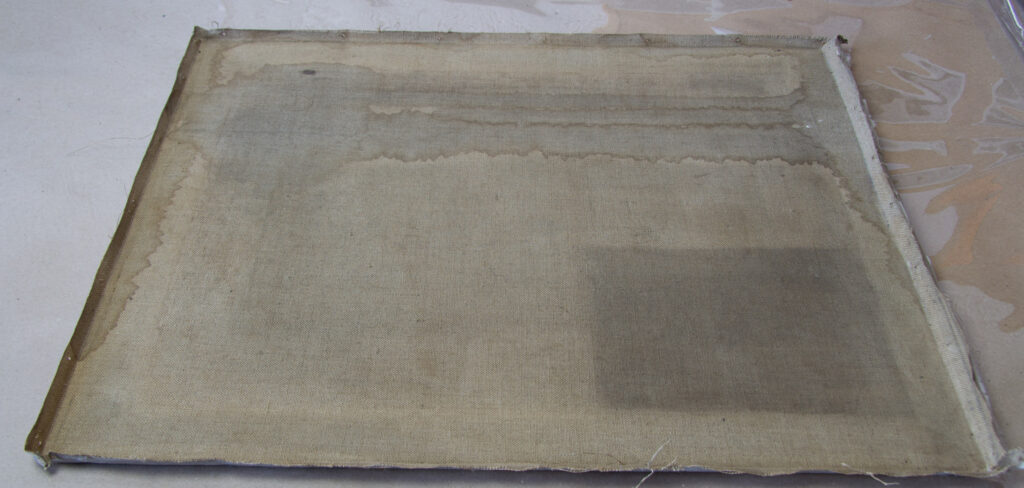
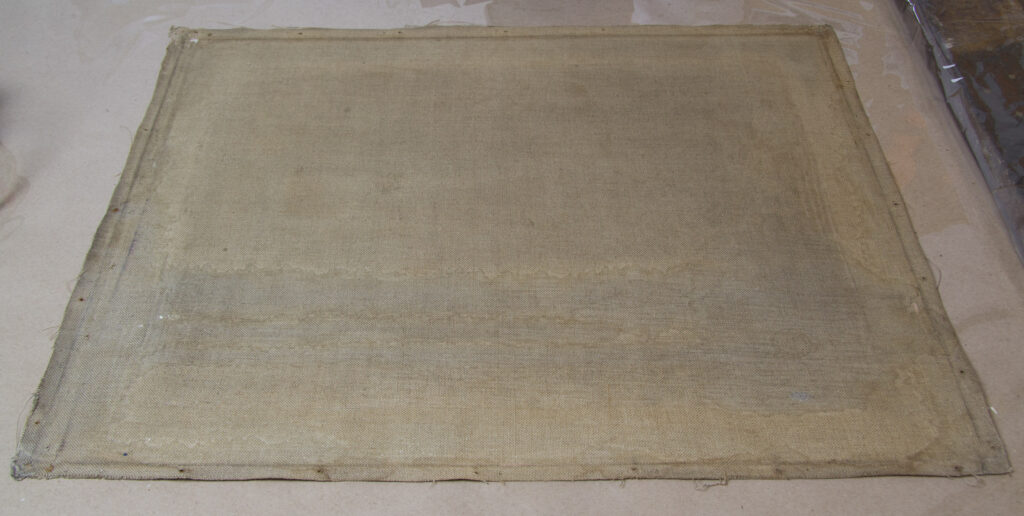
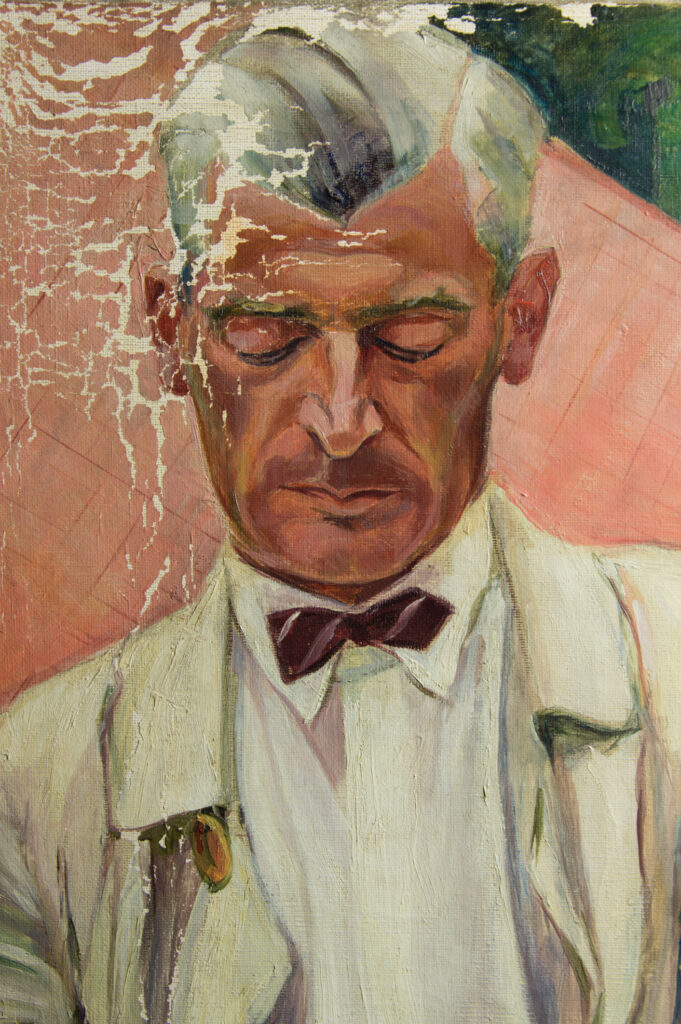
The paint and ground layers are missing in several large areas. Around these spots, the paint is loose, raised, or cracked, with a high risk of further flaking. This is most noticeable in the upper left background, the upper left part of the face, and along an imaginary line leading down to the hands holding the book. The back of the canvas shows traces of liquid damage, which caused the layers to separate.
The painting is covered with a thin layer of surface dirt, and the varnish is slightly degraded and yellowed. Dirt is especially noticeable on the back.
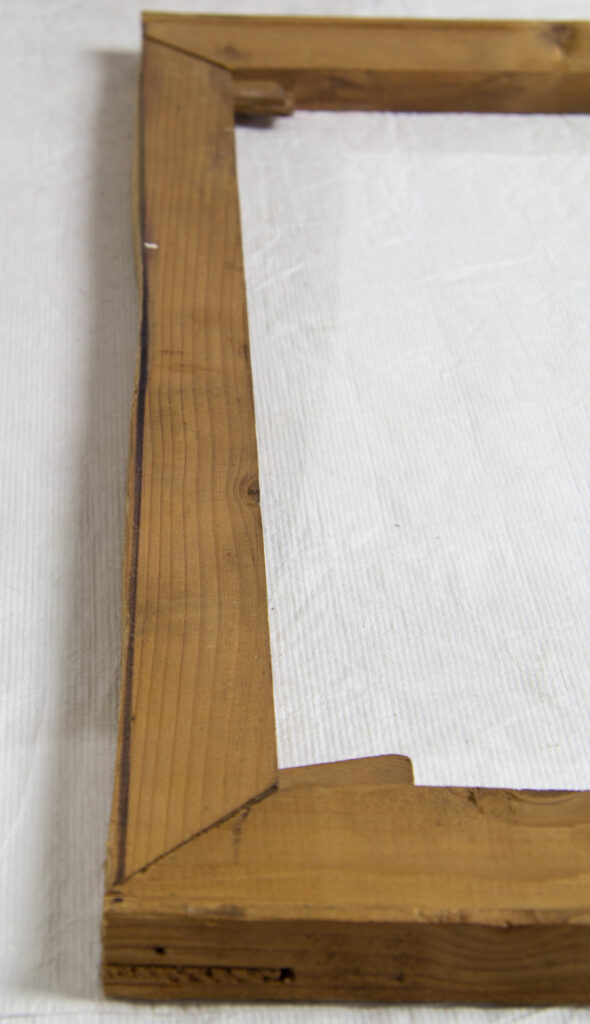
The canvas is secured to the stretcher with nails spaced excessively far apart, which contributes to deformation and uneven tensioning of the canvas. The stretcher frame exhibits minor mechanical damage, surface dirt, adhesive tape residues, and pencil and chalk markings, possibly indicating a former price or inventory number. The lower stretcher bar is narrower than the other three.
Condition of the Artwork After Restoration
The canvas was carefully removed from the stretcher and treated to reduce the deformations and restore a stable and even tension. The original stretcher was retained and adjusted where necessary, with the canvas securely reattached using appropriately spaced fasteners. The edges and corners were aligned and tensioned to eliminate the visible stretcher bar marks and sagging.
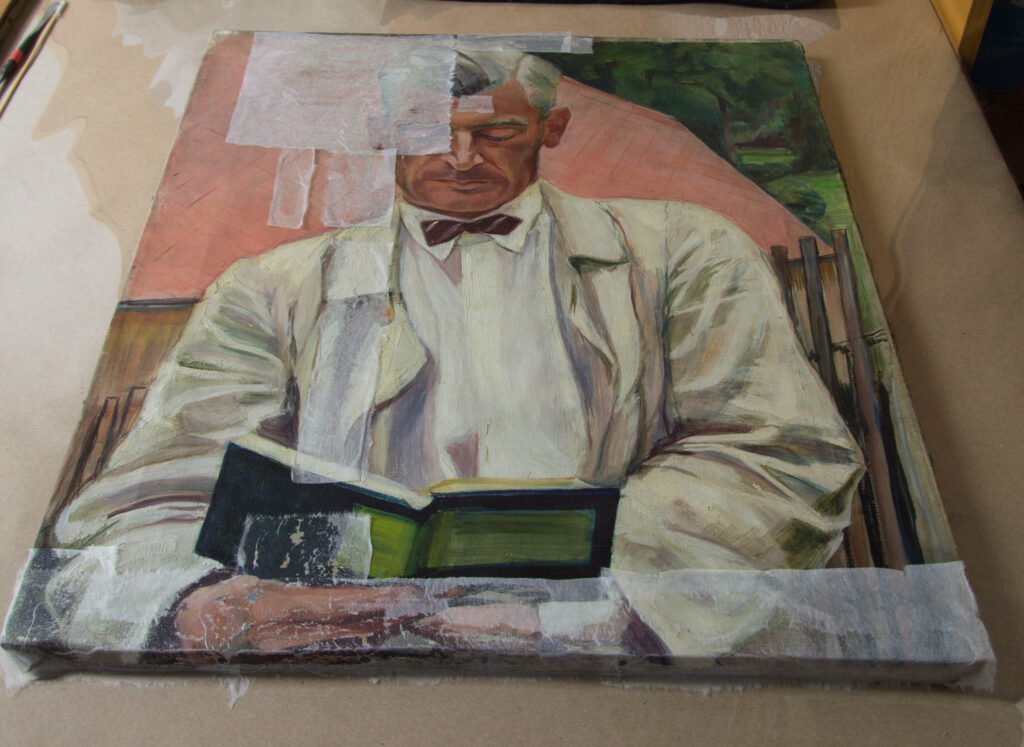
Loose and raised paint and ground layers were consolidated throughout the painting, with particular attention given to the areas of active lifting and flaking. Detached and missing areas were stabilized, and structural damage to the canvas was repaired. The areas of loss were filled and levelled in preparation for reintegration.
The surface was rid of accumulated dirt and deposits. The painting was repositioned on the support to correct the displacement resulting from a previous treatment, restoring the composition to its originally intended position and proportions. The existing paint layers and later additions were preserved.
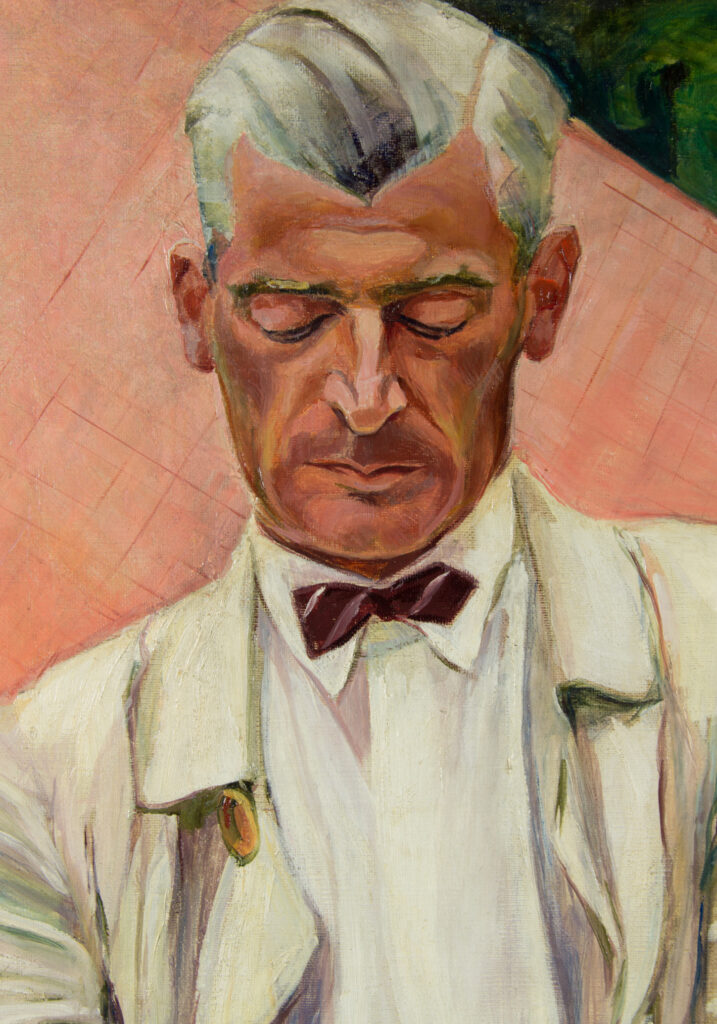
Losses and abrasions were reintegrated using reversible restoration materials and carefully matched retouching. Final protective varnish was applied.